Digital Wellness Academy
Platform Courses For Individuals For Providers For Universities For Enterprises Pricing Sign in Apply for beta
Somatic & Body-Based Healing

Complex Trauma & C-PTSD

An Integration course (Layer 3, clinically gated) that is strictly educational. It helps learners understand what complex trauma is, how it lives in the body, and what real healing looks like, while drawing a firm line that processing belongs with a professional, not in this course or alone.

6 Lessons 2.5-3 Hours Trauma-Informed

Course Overview

Educational, and clinically gated

This course is psychoeducation, not treatment. The somatic and trauma material is designed to be used alongside care from a trauma-informed professional. Layer 3 (Complex Trauma & C-PTSD) is clinically gated and unlocks only after the earlier layers. If you are in crisis, call or text 988.

An Integration course (Layer 3, clinically gated) that is strictly educational. It helps learners understand what complex trauma is, how it lives in the body, and what real healing looks like, while drawing a firm line that processing belongs with a professional, not in this course or alone.

What You'll Learn

  • ✓Distinguish complex from single-incident trauma and hold trauma adaptations as protective strategies, not defects
  • ✓Understand the ICD-11 Complex PTSD diagnosis and its honest limits, including that screening is not diagnosis
  • ✓Recognize how complex trauma narrows the window of tolerance and lives as felt-more-than-remembered states
  • ✓Understand the honestly debated treatment landscape (phase-based vs immediate trauma-focused) and why pace and safety matter
  • ✓Apply the safety principles of stabilization, titration, and dual awareness
  • ✓Identify trauma-informed care and know what is safe to do alone (stabilize) versus what needs a professional (process)

Evidence & Clinical Approach

Built on the Complex Trauma & ICD-11 C-PTSD framework and taught at a deliberately high evidence bar: it separates well-supported practice from popular-but-contested theory, and is psychoeducation designed to support, not replace, professional care.

Course Lessons (6 total)

  • 1What Makes Trauma Complex25 min
  • 2Understanding Complex PTSD30 min
  • 3How Complex Trauma Lives in the Body25 min
  • 4Why Healing Looks Different30 min
  • 5Safety First: Stabilization Before Processing30 min
  • 6Finding the Right Help, and What's Safe Now25 min

Each lesson includes interactive exercises, quizzes, and progress tracking inside the platform.

Frequently Asked Questions

Is this course a replacement for therapy?

No. It provides psychoeducation and skill-building based on evidence-based frameworks, but it is not a substitute for individualized professional treatment. It works best alongside care, as structured learning between sessions.

What if I'm currently in crisis?

If you're experiencing a mental health crisis, contact emergency services (988 Suicide & Crisis Lifeline, 911) or go to your nearest emergency room. The platform includes safety monitoring that alerts assigned providers when distress is detected.

How is this different from self-help content?

Structured, sequential lessons with interactive exercises, progress tracking, and provider oversight. Your assigned provider can see your progress and tailor sessions to what you are learning.

Course Features

  • ✓6 comprehensive lessons
  • ✓Complex Trauma & ICD-11 C-PTSD
  • ✓Interactive exercises and quizzes
  • ✓Progress tracking
  • ✓Provider coordination
  • ✓Self-paced learning

24/7 Platform Safety

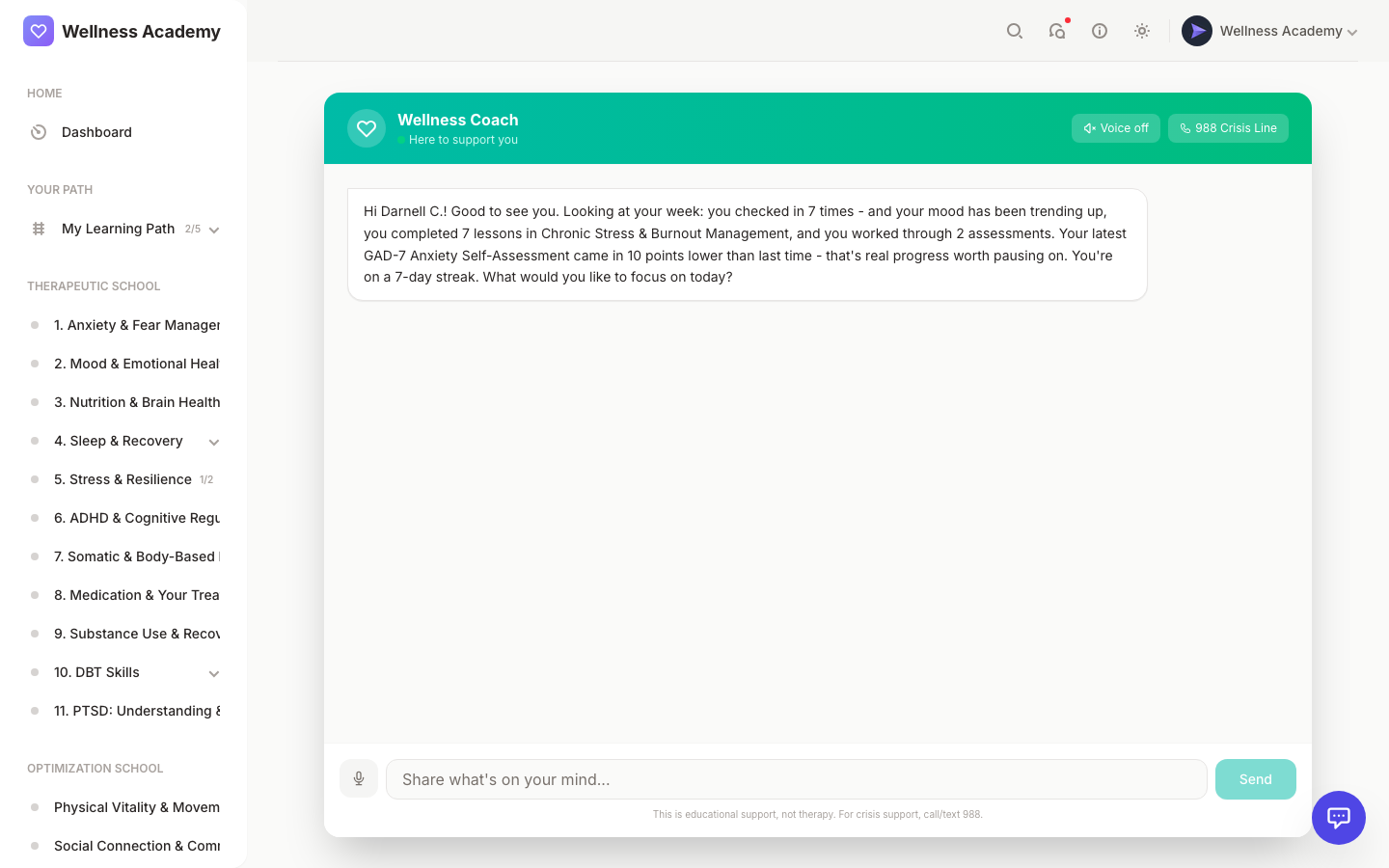
The platform runs the MAIA distress classifier on every text input and alerts your assigned provider if distress is detected, ensuring clinical oversight when needed.

Explore the Full Library

81 courses across the Therapeutic, Optimization, and Mind & Performance schools.

View all courses →