THE FRAMEWORK

The Architecture of Human Optimization

Elevating human potential through evidence-based digital wellness.

Most mental-health platforms treat pathology. This framework builds capacity. Five evidence-based pillars - each with a named neurobehavioral mechanism - that compound across domains to produce systemic resilience and flourishing, not just symptom reduction.

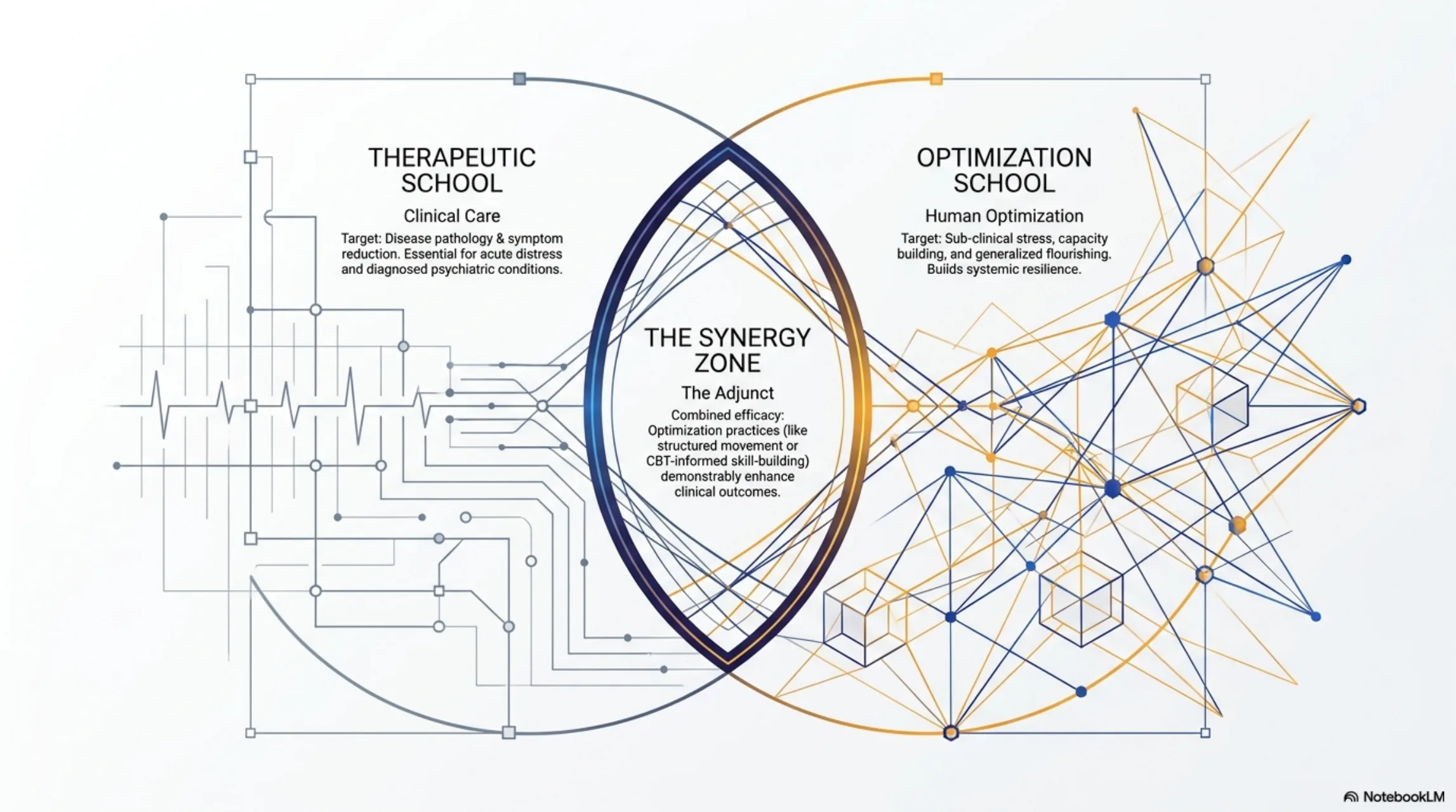
Diagram showing the Therapeutic School on the left for clinical care, the Optimization School on the right for human optimization, with a central Synergy Zone where combined interventions produce superior outcomes.
TWO SCHOOLS, ONE ARCHITECTURE

Therapeutic, Optimization, and the Synergy Zone

The Therapeutic School targets disease pathology and symptom reduction. It is essential for acute distress and diagnosed psychiatric conditions. The Optimization School targets human flourishing: sub-clinical stress, capacity-building, and generalized resilience. It is essential for the 80% of any population that will never walk through a clinical front door.

Between them is the Synergy Zone: combined interventions where structured movement, CBT-informed skill-building, and other optimization practices demonstrably enhance clinical outcomes. This is the zone most platforms miss entirely.

Digital Wellness Academy is architected to serve both schools and the synergy zone on one HIPAA-compliant platform, with shared identity, isolated progress, and unified provider coordination.
How the two schools differ - and why both matter

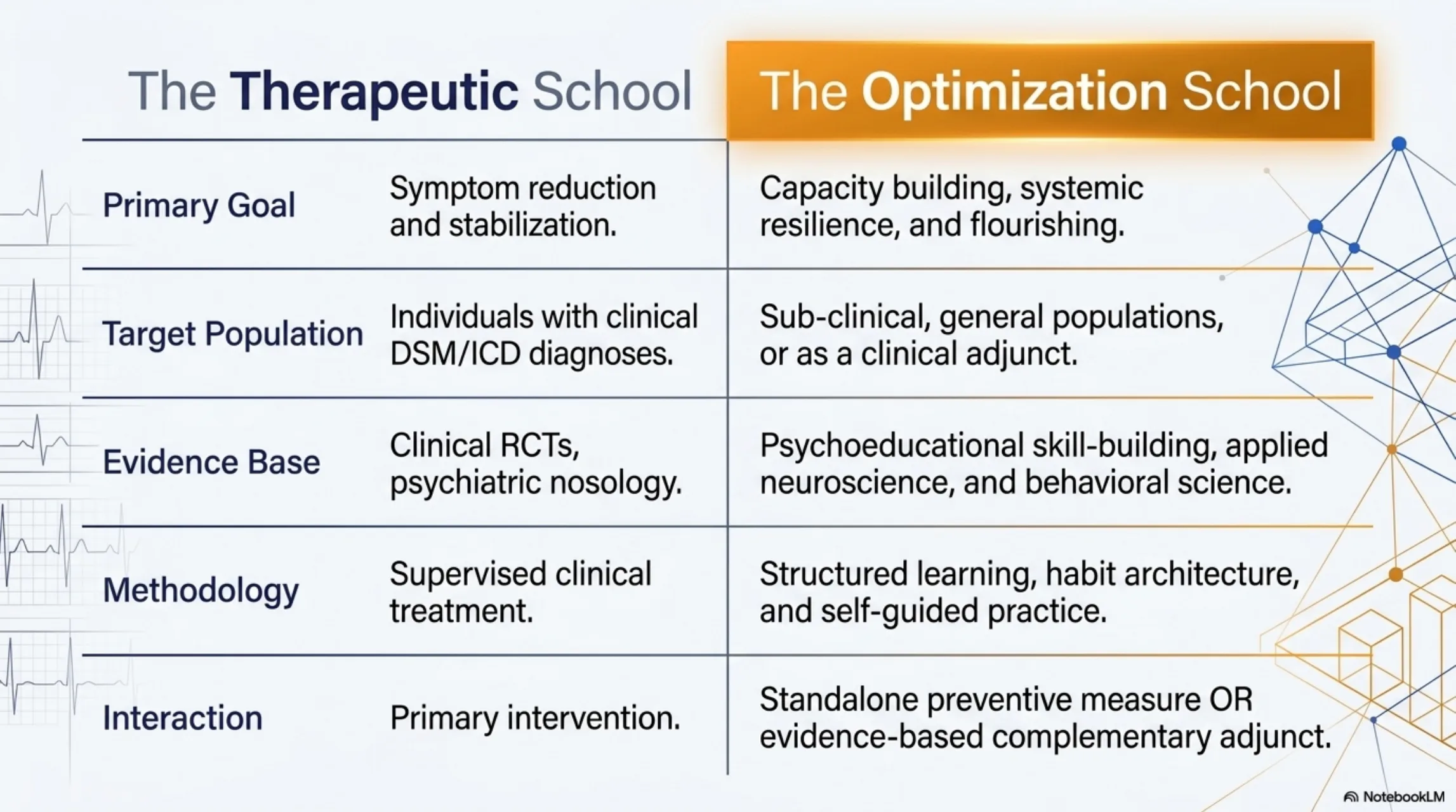
The therapeutic and optimization approaches are not competing paradigms. They are complementary interventions with different goals, different evidence bases, and different populations.

Comparison table of Therapeutic School versus Optimization School across five dimensions: primary goal, target population, evidence base, methodology, and interaction.
Therapeutic School Optimization School
Primary Goal Symptom reduction and stabilization. Capacity-building, systemic resilience, and flourishing.
Target Population Individuals with clinical DSM/ICD diagnoses. Sub-clinical, general populations, or as a clinical adjunct.
Evidence Base Clinical RCTs, psychiatric nosology. Psychoeducational skill-building, applied neuroscience, behavioral science.
Methodology Supervised clinical treatment. Structured learning, habit architecture, and self-guided practice.
Interaction Primary intervention. Standalone preventive measure or evidence-based complementary adjunct.
The Five Pillars

Thriving is built, not just healed

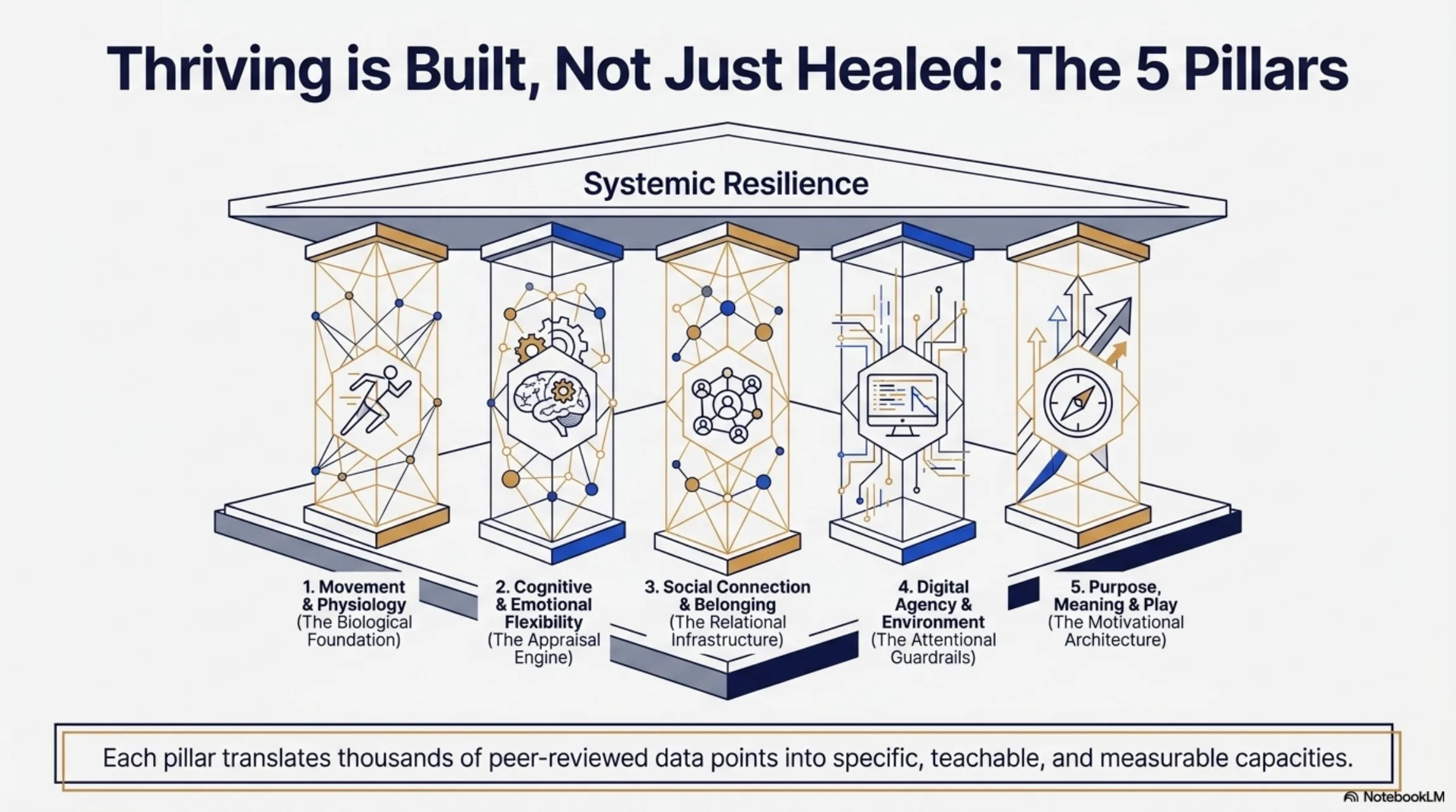
Each pillar translates thousands of peer-reviewed data points into specific, teachable, measurable capacities. Together they form a load-bearing architecture for systemic resilience.

The Five Pillars of Systemic Resilience - Movement and Physiology, Cognitive and Emotional Flexibility, Social Connection and Belonging, Digital Agency and Environment, and Purpose, Meaning, and Play - visualized as a classical Parthenon of mental capacity.
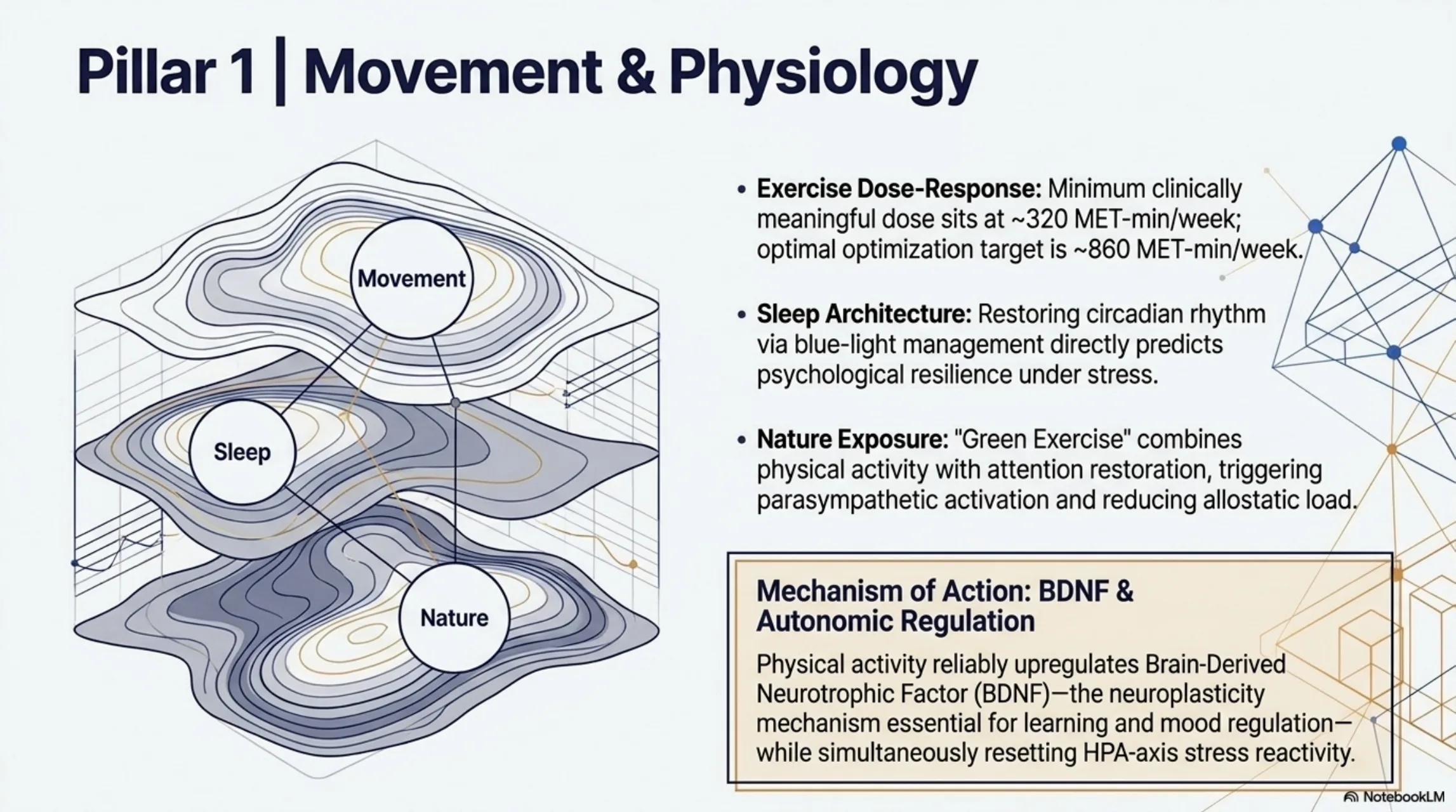
Pillar 1: Movement and Physiology. Interleaved hill landscapes representing the triad of Movement, Sleep, and Nature.
Pillar 1 · The Biological Foundation

Movement & Physiology

  • Exercise Dose-Response. Minimum clinically meaningful dose sits at ~320 MET-min/week; the optimal optimization target is ~860 MET-min/week.
  • Sleep Architecture. Restoring circadian rhythm via blue-light management directly predicts psychological resilience under stress.
  • Nature Exposure. "Green Exercise" combines physical activity with attention restoration, triggering parasympathetic activation and reducing allostatic load.
Mechanism of action: BDNF & Autonomic Regulation

Physical activity reliably upregulates Brain-Derived Neurotrophic Factor (BDNF) - the neuroplasticity mechanism essential for learning and mood regulation - while simultaneously resetting HPA-axis stress reactivity.

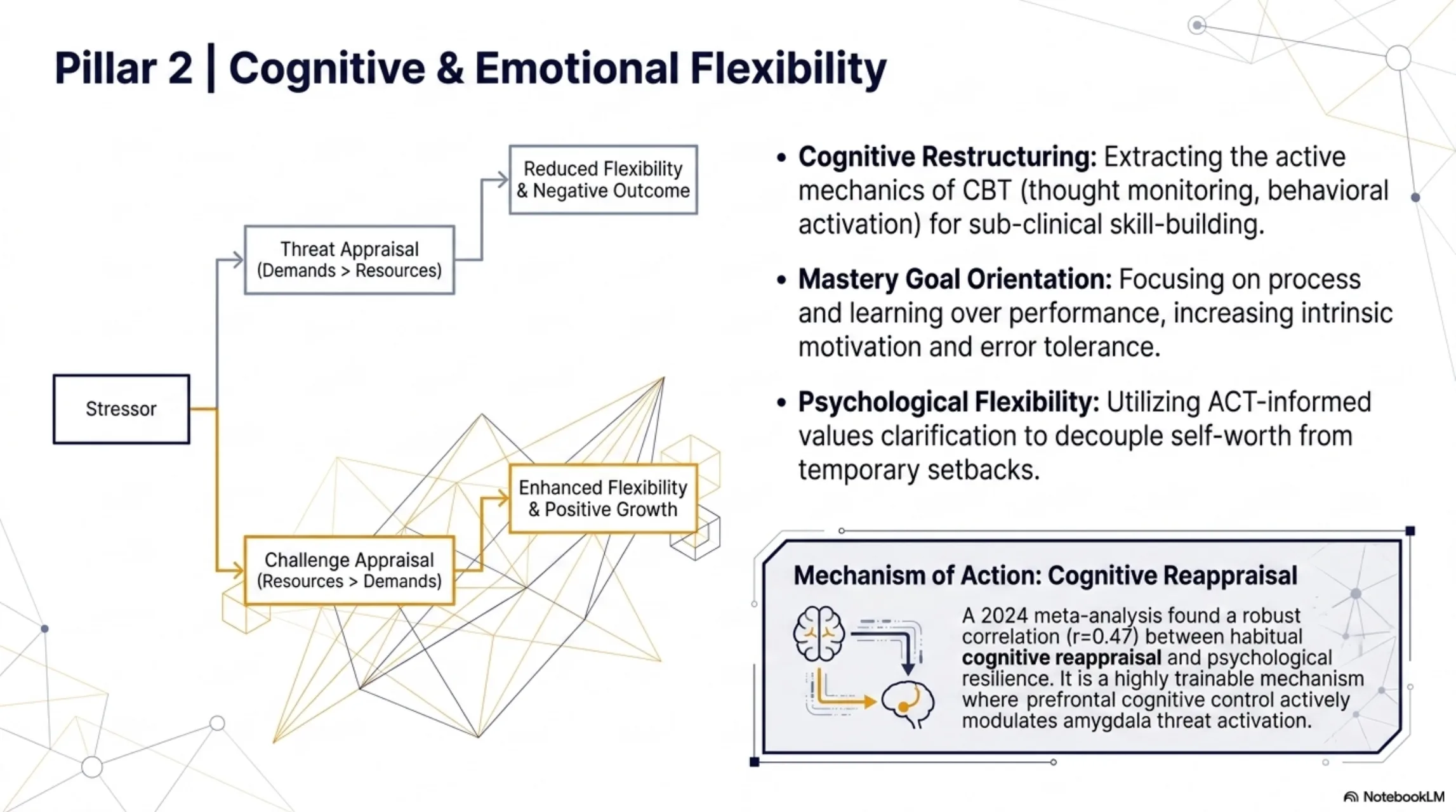
Pillar 2: Cognitive and Emotional Flexibility. Flow diagram showing a stressor leading through threat appraisal versus challenge appraisal, ending in either reduced flexibility or enhanced flexibility and positive growth.
Pillar 2 · The Appraisal Engine

Cognitive & Emotional Flexibility

  • Cognitive Restructuring. Extracting the active mechanics of CBT - thought monitoring, behavioral activation - for sub-clinical skill-building.
  • Mastery Goal Orientation. Focusing on process and learning over performance; increases intrinsic motivation and error tolerance.
  • Psychological Flexibility. Using ACT-informed values clarification to decouple self-worth from temporary setbacks.
Mechanism of action: Cognitive Reappraisal

A 2024 meta-analysis found a robust correlation (r≈0.47) between habitual cognitive reappraisal and psychological resilience. This is a highly trainable mechanism where prefrontal cognitive control actively modulates amygdala threat activation.

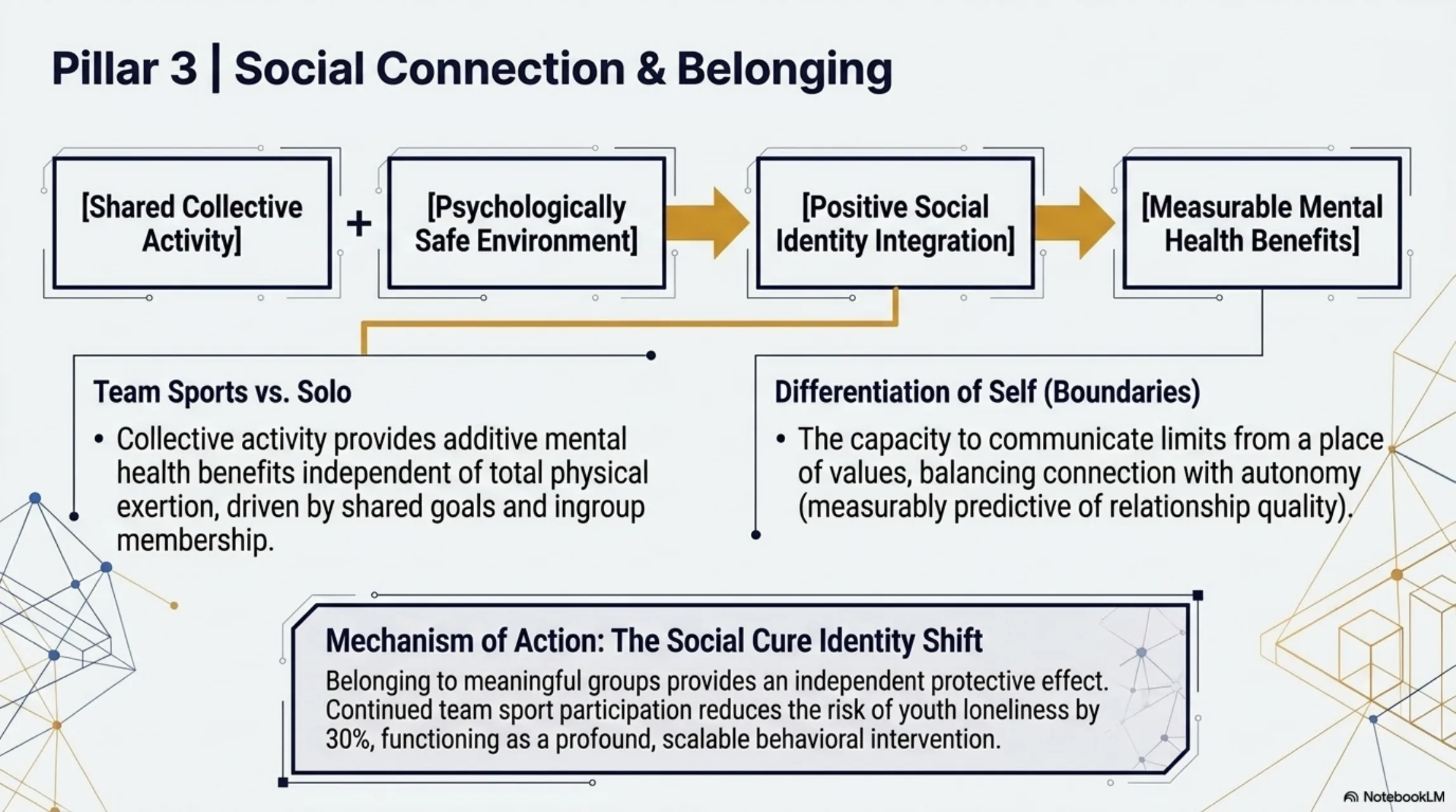
Pillar 3: Social Connection and Belonging. Sequential diagram showing how shared collective activity plus psychologically safe environment plus positive social identity integration leads to measurable mental health benefits.
Pillar 3 · The Relational Infrastructure

Social Connection & Belonging

  • Team sports vs. solo. Collective activity provides additive mental-health benefits independent of total physical exertion - driven by shared goals and ingroup membership.
  • Differentiation of self & boundaries. The capacity to communicate limits from a place of values, balancing connection with autonomy - measurably predictive of relationship quality.
Mechanism of action: The Social Cure Identity Shift

Belonging to meaningful groups provides an independent protective effect. Continued team-sport participation reduces the risk of youth loneliness by ~30%, functioning as a profound, scalable behavioral intervention.

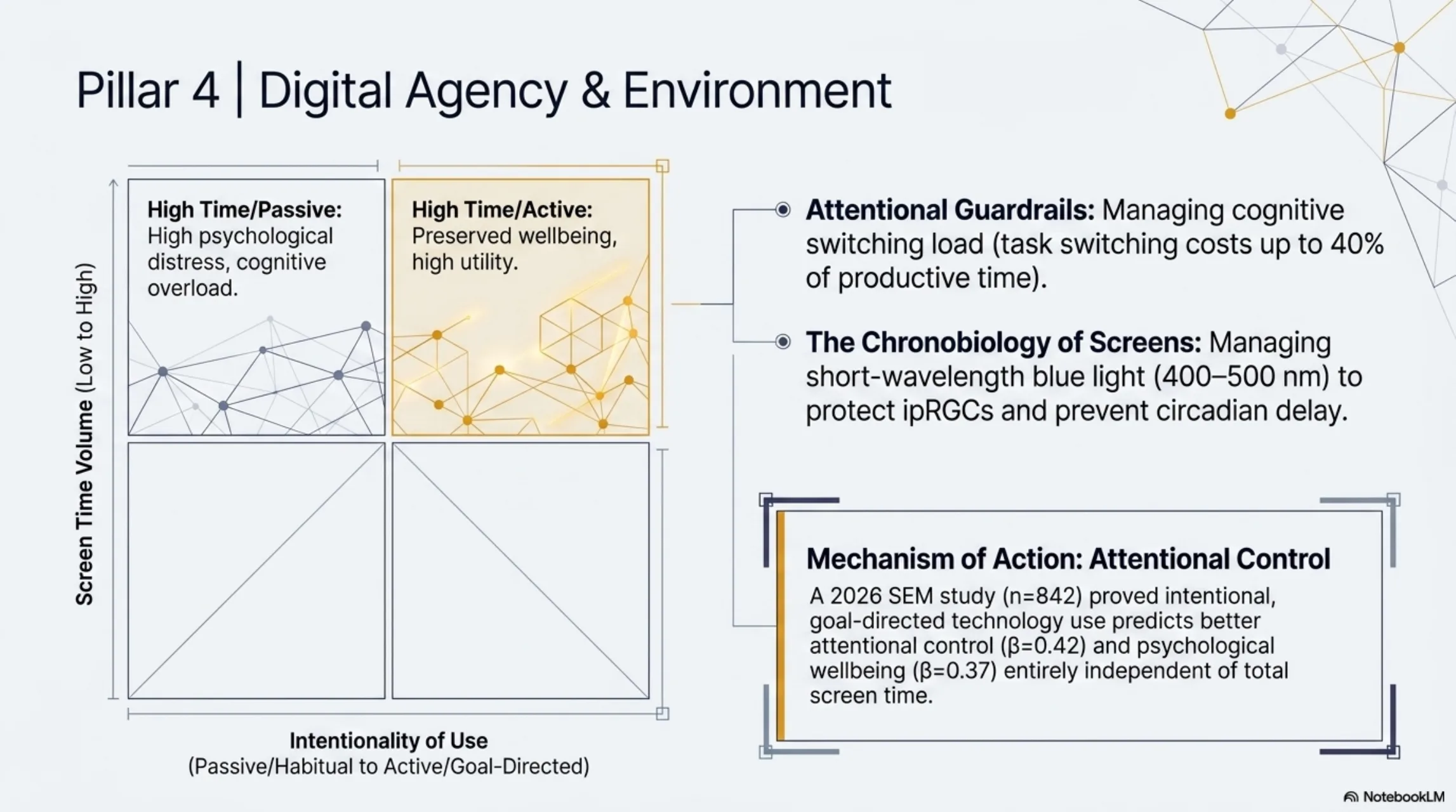
Pillar 4: Digital Agency and Environment. A two-by-two matrix of screen-time volume against intentionality of use, showing that high-time active goal-directed use preserves wellbeing while high-time passive use produces distress.
Pillar 4 · The Attentional Guardrails

Digital Agency & Environment

  • Attentional guardrails. Managing cognitive switching load - task-switching costs up to 40% of productive time.
  • The chronobiology of screens. Managing short-wavelength blue light (400-500 nm) to protect intrinsically photosensitive retinal ganglion cells (ipRGCs) and prevent circadian delay.
Mechanism of action: Attentional Control

A 2026 SEM study (n=842) proved intentional, goal-directed technology use predicts better attentional control (β=0.42) and psychological wellbeing (β=0.37) entirely independent of total screen time. Volume is not the variable - intentionality is.

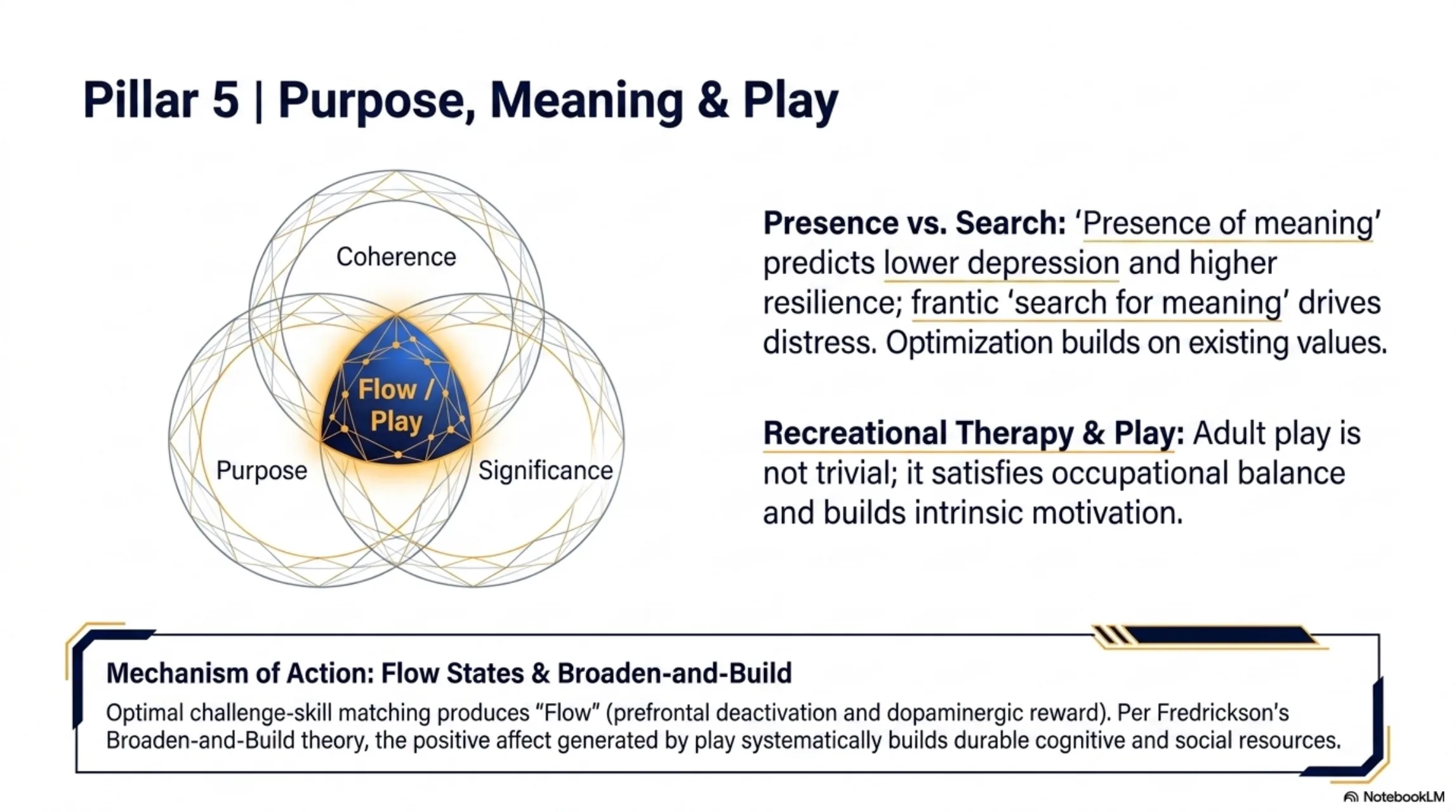
Pillar 5: Purpose, Meaning, and Play. A Venn diagram of Coherence, Purpose, and Significance converging on Flow and Play at the center.
Pillar 5 · The Motivational Architecture

Purpose, Meaning & Play

  • Presence vs. search. "Presence of meaning" predicts lower depression and higher resilience; frantic "search for meaning" drives distress. Optimization builds on existing values.
  • Recreational therapy & play. Adult play is not trivial - it satisfies occupational balance and builds intrinsic motivation.
Mechanism of action: Flow states & Broaden-and-Build

Optimal challenge-skill matching produces flow (prefrontal deactivation and dopaminergic reward). Per Fredrickson's Broaden-and-Build theory, the positive affect generated by play systematically builds durable cognitive and social resources.

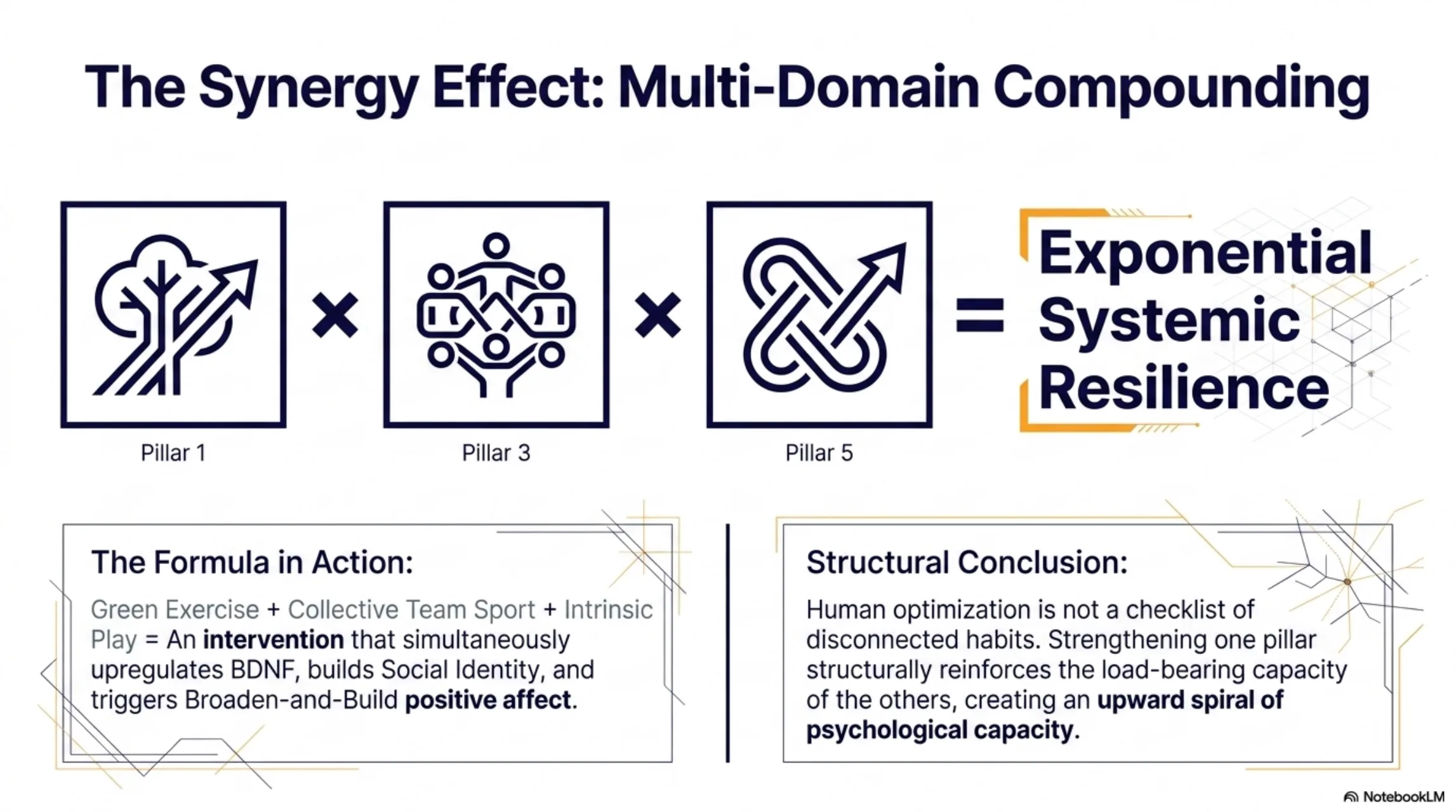
The Synergy Effect

Pillars compound. Resilience is multiplicative.

Human optimization is not a checklist of disconnected habits. Each pillar structurally reinforces the load-bearing capacity of the others.

The Synergy Effect: Pillar 1 times Pillar 3 times Pillar 5 equals exponential systemic resilience. A multi-domain compounding model.

The formula in action

Green Exercise + Collective Team Sport + Intrinsic Play is an intervention that simultaneously upregulates BDNF, builds Social Identity, and triggers Broaden-and-Build positive affect. One hour. Three neurobehavioral pathways engaged at once.

Structural conclusion

Strengthening one pillar structurally reinforces the load-bearing capacity of the others. That is the upward spiral of psychological capacity - and it cannot be replicated by any single-modality intervention.

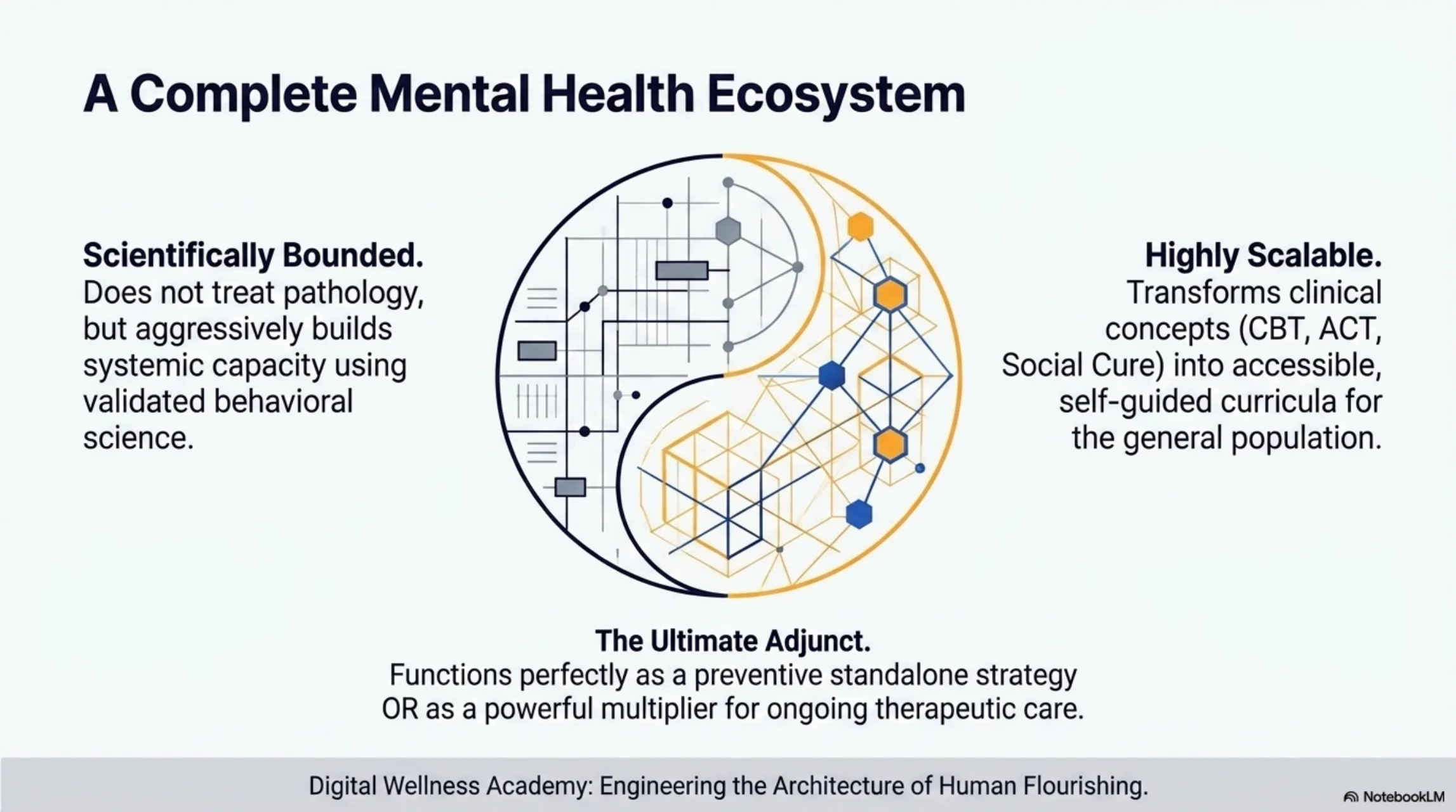
A complete mental-health ecosystem

A complete mental health ecosystem: Scientifically Bounded, Highly Scalable, The Ultimate Adjunct. Engineering the Architecture of Human Flourishing.

Scientifically bounded

Does not treat pathology - but aggressively builds systemic capacity using validated behavioral science.

Highly scalable

Transforms clinical concepts (CBT, ACT, Social Cure) into accessible, self-guided curricula for the general population.

The ultimate adjunct

Functions as a preventive standalone strategy - or as a powerful multiplier for ongoing therapeutic care.

Digital Wellness Academy: Engineering the Architecture of Human Flourishing.

Frequently asked questions

What are the Five Pillars of human optimization and mental resilience?

The Five Pillars are: (1) Movement & Physiology - exercise dose-response, sleep architecture, and BDNF upregulation; (2) Cognitive & Emotional Flexibility - cognitive restructuring, ACT-based psychological flexibility, and mastery goal orientation; (3) Social Connection & Belonging - team-based activity, differentiation of self, and the Social Cure Identity Shift; (4) Digital Agency & Environment - intentional vs. passive screen use, chronobiology of blue light, and attentional guardrails; (5) Purpose, Meaning & Play - presence of meaning vs. search, recreational therapy, and Broaden-and-Build through flow states.

How does exercise improve mental health at a biological level?

Exercise at 320-860 MET-minutes per week triggers BDNF (brain-derived neurotrophic factor) upregulation, which supports neuroplasticity and stress resilience. It also resets the HPA axis (the body's stress-response system), reducing baseline cortisol and improving emotional regulation. Green exercise - physical activity in natural environments - adds parasympathetic nervous system activation on top of these effects.

Why do the Five Pillars compound rather than add?

Each pillar structurally reinforces the others. For example: green exercise (Pillar 1) + team sport (Pillar 3) + play-based intrinsic motivation (Pillar 5) simultaneously produces BDNF upregulation, Social Identity building, and Broaden-and-Build positive affect - effects that cannot be achieved by any single intervention. Strengthening one pillar increases the load-bearing capacity of the others, creating a multiplicative rather than additive resilience architecture.

More from our network

🚀SoloFrameHub

Two AI-native academies for founders. GTM OS is the go-to-market operating system you run your day in; 60-Day Founder turns an idea into investor-ready proof.

🧠SVTech AI

Build vertical AI products with platform discipline.

🩺SVTech Digital

The operating system for psychiatric practice growth.

💼BizFrameHub

BizFrameHub: practical AI for professionals. TradesOS: run a more profitable trade business.

🗣️SVTech English

Master business English for tech professionals.

🇨🇴Colombia Conversa

Master Colombian Spanish. Discover Bogotá.