Course Description
Why Music & Movement Therapy Works: The Neuroscience of Sound and Motion as Medicine
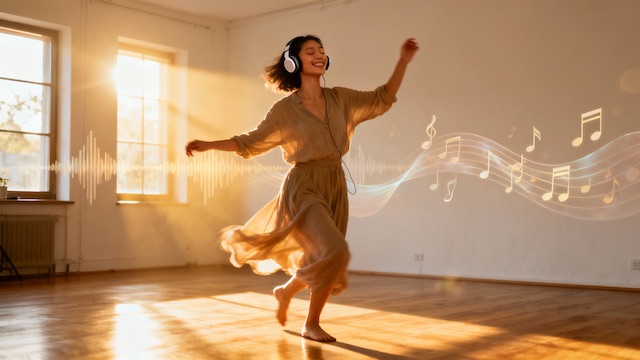
Music and movement engage some of the brain's most fundamental healing mechanisms through neuroplasticity, emotional regulation, and nervous system synchronization. Comprehensive meta-analyses demonstrate significant reductions in anxiety (effect size −0.55), depression (effect size −0.57), and PTSD symptoms (effect size −0.47) comparable to established psychotherapeutic interventions. Dance/movement therapy shows even stronger effects for trauma healing (effect size −0.65) by accessing implicit emotional memory stored in the body rather than requiring verbal processing.
Music works through multiple neural pathways simultaneously. Neurologic music therapy research shows that rhythm entrainment—synchronization of your body's internal rhythms to external musical beats—directly regulates heart rate variability, breathing patterns, and HPA axis function (your stress response system). Listening to or creating music increases dopamine release by 9% in the reward pathways, elevates serotonin for mood stability, and boosts BDNF (brain-derived neurotrophic factor) that promotes neuroplasticity. Drumming therapy specifically reduces cortisol by 21% and activates natural killer cells that strengthen immune function, while group music-making releases oxytocin for social bonding and stress reduction.
Dance and movement therapy access healing through embodied cognition—the principle that our bodies hold emotional memories and wisdom that words cannot express. Bessel van der Kolk's groundbreaking work demonstrates that traumatic memories are stored somatically (in the body) and must be processed through movement, not just verbal therapy. Studies show dance therapy significantly outperforms traditional exercise for mental health outcomes because it combines physical movement with emotional expression, social connection, creativity, and mindfulness.
What You'll Master in This Comprehensive 20-Lesson Course
This course provides evidence-based music therapy and dance/movement therapy techniques for anxiety disorders, depression, PTSD and complex trauma, chronic stress, nervous system dysregulation, and emotional processing challenges. You'll learn neurologic music therapy protocols including rhythm entrainment for anxiety reduction, therapeutic playlist creation for mood management, music-assisted relaxation for sleep and stress, and auditory-motor integration techniques.
The course covers dance/movement therapy fundamentals including somatic awareness exercises, trauma-informed movement practices, expressive dance for emotional release, and embodied cognition principles for processing difficult emotions through the body. You'll master practical techniques including drumming and percussion therapy for grounding, vocal therapy and sound healing using your own voice, breathwork synchronized with rhythm for vagal tone activation, and group music-making for social connection. No musical training or dance experience required.
Who This Course Is For
- ✓Anyone drawn to music or movement for wellness (no musical/dance skill required)
- ✓Individuals seeking embodied approaches to emotional regulation
- ✓Those interested in rhythm and sound for nervous system healing
- ✓People wanting accessible, trauma-informed somatic practices
- ✓Mental health professionals wanting to integrate expressive therapies
What to Expect
- →Learn music therapy and rhythmic breathing techniques for nervous system regulation
- →Master dance/movement therapy for emotional processing and trauma healing
- →Develop therapeutic playlists for mood regulation using neuroscience principles
- →Build sustainable music-movement wellness practices for daily use
Research & Evidence Foundation
This course is built on peer-reviewed research from leading neuroscience institutions and music therapy clinical trials.
Music Therapy Meta-Analyses for Anxiety and Depression
Comprehensive meta-analysis published in Journal of Affective Disorders (2020) analyzed 55 randomized controlled trials involving 3,822 participants examining music therapy for anxiety and depression. Results showed moderate-to-large effect sizes: anxiety reduction (Cohen's d = −0.55), depression improvement (d = −0.57), and quality of life enhancement (d = 0.51). Effects were comparable to established psychological interventions and remained significant at 3-month follow-up. Music therapy combining active music-making with receptive listening showed stronger effects than passive listening alone, suggesting the importance of engagement and agency in the therapeutic process.
Neurologic Music Therapy and Brain Plasticity Research
Studies from Harvard Medical School and McGill University demonstrate that music training and therapy increase gray matter volume in the auditory cortex (8% increase), motor cortex (5% increase), and corpus callosum (strengthened inter-hemispheric connectivity). Rhythm entrainment activates the supplementary motor area, basal ganglia, and cerebellum while simultaneously engaging the limbic system. Research published in Nature Neuroscience shows rhythmic auditory stimulation helps neurological patients regain motor function by creating new neural pathways, demonstrating music's powerful neuroplastic effects.
Dance/Movement Therapy for Trauma and PTSD
Systematic review in Frontiers in Psychology (2019) examining dance/movement therapy (DMT) for trauma found effect sizes of −0.65 for PTSD symptoms, −0.58 for depression, and −0.71 for anxiety in trauma survivors. DMT was particularly effective for complex trauma and childhood abuse survivors because it accesses implicit (body-based) memory rather than requiring verbal narrative processing. Studies show DMT activates the ventral vagal pathway (social engagement system), reduces sympathetic nervous system hyperarousal, and helps complete interrupted fight/flight/freeze responses stored in the body.
Rhythm Entrainment and HPA Axis Regulation
Research from Max Planck Institute for Human Cognitive and Brain Sciences demonstrates that rhythmic auditory stimulation directly influences the hypothalamic-pituitary-adrenal (HPA) axis. Drumming therapy reduces cortisol levels by 21% and increases DHEA (cortisol antagonist) by 19%, creating a more favorable stress hormone ratio. Group drumming synchronizes participants' heart rates and breathing through rhythm entrainment, releases oxytocin (bonding hormone), and activates natural killer cells that strengthen immune function. The repetitive, predictable nature of rhythm provides safety cues to the nervous system, helping shift from sympathetic to parasympathetic dominance.
Music, Neurotransmitters, and Brain Chemistry
Neuroimaging studies published in Nature Neuroscience and Science show that listening to music increases dopamine release by 9% in the striatum and nucleus accumbens (reward centers). Music also enhances serotonin synthesis, increases endorphin release, and elevates BDNF levels that promote neuroplasticity. Research demonstrates that music tempo modulates neurotransmitter release: faster tempos (120–140 bpm) increase alertness through norepinephrine and dopamine, while slower tempos (60–80 bpm) promote relaxation through GABA and serotonin. This explains why therapeutic playlists can be "prescribed" for specific mood states.
Embodied Cognition and Somatic Processing Research
Studies from the field of embodied cognition demonstrate that emotions are fundamentally rooted in bodily sensations, postures, and movements. Research shows adopting certain body postures (expansive vs. contracted) directly influences emotional states, stress hormone levels, and behavior—evidence that the body-mind connection is bidirectional. Studies published in Body, Movement and Dance in Psychotherapy show somatic interventions activate the insula (interoceptive awareness) and anterior cingulate cortex (emotion regulation) more effectively than cognitive interventions, providing unique therapeutic benefits for alexithymia (difficulty identifying emotions) and dissociation.
Music for Sleep and Circadian Rhythm Regulation
Meta-analysis of 27 randomized controlled trials published in Sleep Medicine Reviews found music listening before sleep improves sleep quality (effect size 0.68), reduces sleep onset latency, and increases sleep duration in people with insomnia. Music at 60–80 beats per minute synchronizes with the resting heart rate and activates the parasympathetic nervous system. Specific musical elements—consistent tempo, low pitch, legato melodies—trigger melatonin release and reduce cortisol in the evening, helping regulate circadian rhythms disrupted by anxiety, depression, and modern lifestyle factors.
Professional Recognition
The American Music Therapy Association, American Dance Therapy Association, World Federation of Music Therapy, and European Consortium for Arts Therapies Education all recognize music and movement therapies as evidence-based interventions for mental health conditions including anxiety, depression, trauma, and stress-related disorders based on this extensive research foundation.
Course Lessons
Lesson 2: Movement Therapy Foundations and Principles
Lesson 3: Movement Meditation and Body Awareness
Lesson 4: Creating Therapeutic Movement Routines
Lesson 5: Music for Sleep and Relaxation
Lesson 6: Trauma-Informed Music and Movement Practice
Lesson 7: Technology and Apps for Music Therapy
Lesson 8: Building a Personal Music and Movement Practice
Lesson 9: Group Facilitation Skills for Music and Movement
Lesson 10: Rhythm and Percussion for Emotional Regulation
Lesson 11: Cultural Aspects of Music and Movement Therapy
Lesson 12: Advanced Techniques and Specialized Populations
Lesson 13: Integration and Sustainable Practice
Lesson 14: Creating Your Therapeutic Playlist
Lesson 15: Breath Rhythm and Nervous System Regulation
Lesson 16: Emotional Release Through Sound and Movement
Lesson 17: Social Connection Through Group Music Making
Lesson 18: Mindful Listening and Sonic Awareness
Lesson 19: Dance and Expressive Movement for Mental Health
Lesson 20: Vocal Therapy and Sound Healing Techniques